Console Table Price Comparison: Solid Wood, Veneer, Stone Top and Metal Hybrid Builds
A practical console table price comparison of four build types, ranked by relative cost position and expected service life in hotel use. Learn what drives the difference and where to spend or save.
A reliable console table price comparison starts with one idea: the cheapest piece on day one is not always the cheapest piece over the life of the hotel. Solid wood, veneer, stone top and metal hybrid builds sit at different cost positions, and they also age differently under daily hospitality use. This guide ranks the four builds by relative cost and expected service life, so you can decide where the budget works hardest.
We do not quote fixed prices here, because the final figure depends on dimensions, finish, quantity and destination. Instead, we show you how the builds compare to each other and why.
How to read a relative cost comparison
Think of the four builds on a simple scale. Veneer on an engineered core is usually the reference point, because it is the most common specification in hotel projects. The other builds are positioned above or below it depending on material, labour and risk.
- Relative cost position: what you pay at purchase compared with the other builds, for the same size and finish level.
- Service life: how long the piece stays presentable and structurally sound under normal hotel use, before refinishing or replacement is needed.
- Cost over time: purchase price plus refinishing, repair and replacement, which is often what matters to an owner.
Service life is always a range, not a promise. Housekeeping habits, location, humidity and finish quality all move it up or down.
Summary table: four builds side by side
| Build type | Relative purchase cost | Typical service life in hotel use | Main strength | Main risk |
|---|---|---|---|---|
| Veneer on engineered core | Reference (moderate) | Medium to long, if edges and finish are good | Stable, consistent look, efficient for repeated batches | Chipped edges and deep scratches are harder to repair |
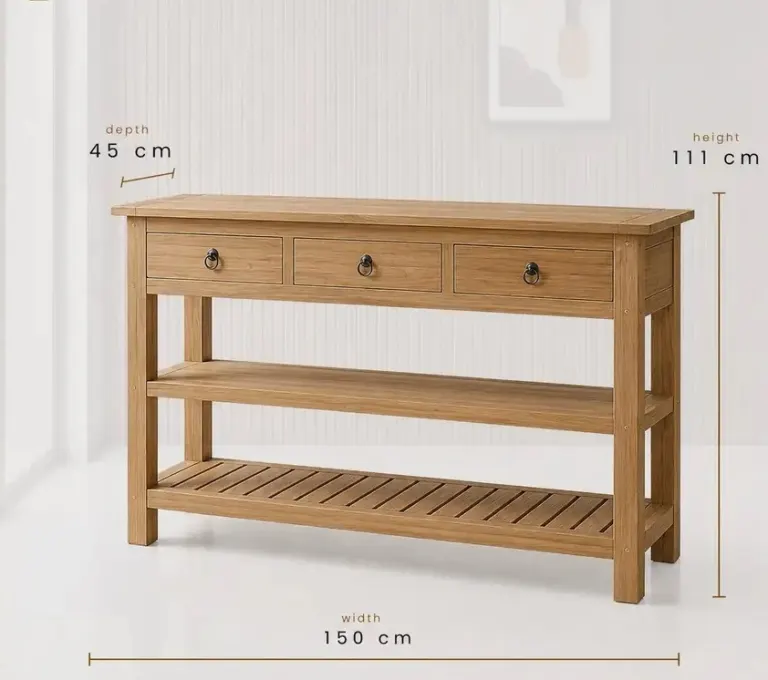
| Solid wood | Moderate to higher | Long, and can be refinished several times | Repairable, authentic feel | Movement with humidity if poorly dried or designed |
| Stone top on wood base | Higher | Long for the top, base depends on wood build | Heat, liquid and scratch resistance | Weight, edge chipping, freight and breakage risk |
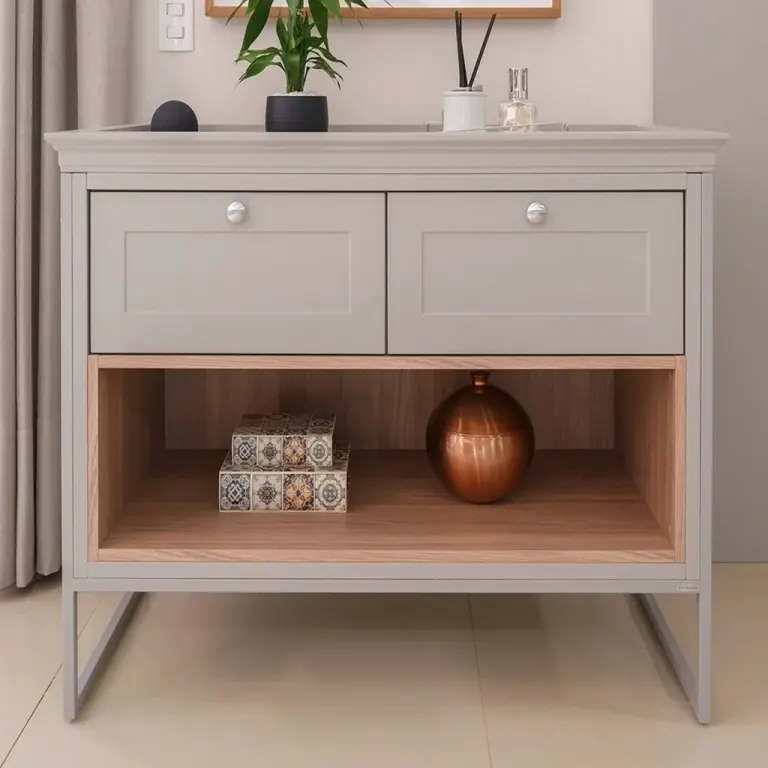
| Metal hybrid (metal and wood) | Moderate to higher | Long, if the metal finish is durable | Slim profiles, strong structure | Finish wear on metal, extra processes and suppliers |
Read the table as a direction, not a price list. A very simple solid wood design can cost less than a complex veneered piece with curved parts and special finishes.
Veneer builds: the efficient reference point
Why veneer sits at the moderate position
Veneer uses a thin layer of real wood over a stable core such as MDF or plywood. It uses less premium timber, and the panels resist warping, which keeps production efficient. For batches of 50 or 500 pieces, veneer also gives good visual consistency when the veneer is sourced and sequenced carefully.
Service life considerations
Veneer lasts well when the edges are properly protected and the top has a hard-wearing finish. The weak point is damage that cuts through the veneer layer, since deep chips cannot be sanded away like solid wood. For high-traffic entrances, ask about thicker veneer and protective coatings. Our related guide on veneer quality and edge banding explains what to inspect.
Solid wood builds: higher material use, better repairability
Solid wood costs more mainly because of material yield, drying time and the care needed to control movement. Wide tops often need to be glued up from several boards, and every extra step adds labour. The species also matters; a dense hardwood costs more to buy and to machine than a softer one.
The advantage is long-term. Scratches, water rings and dents can usually be sanded and refinished on site or in a workshop, which extends service life considerably. If you want to understand the technical trade-offs in more depth, the comparison of solid wood and veneer covers durability in detail.
In a veneer vs solid cost discussion, the honest answer is that solid wood often costs more at purchase but may cost less over a long ownership period, particularly in public areas where wear is heavy. For guest rooms with moderate use, veneer is often the more balanced choice.
Stone top builds: the price of heat and stain resistance
A stone top console cost is driven by three things: the stone itself, the fabrication (cutting, edge profiling, polishing) and the handling. Marble, quartz-type surfaces and natural stone vary widely, and so does the price per square metre. The wooden base also has to be engineered to carry the extra weight.
- Weight: heavier tops need stronger frames and, for wall fixing, suitable brackets and wall construction.
- Freight: stone adds weight and requires protective crating, which increases packing and shipping cost.
- Breakage risk: thin or long tops with cut-outs are more fragile in transit and on site.
On the plus side, the top itself can last for decades with sensible care, and it handles drinks, trays and hot items better than most timber finishes. If the top will be seen and touched daily, such as in a lobby, that resilience can justify the higher starting cost. See our overview of marble, stone and glass tops on wooden bases for pairing ideas.
Metal hybrid builds: cost depends on the metal work
Metal and wood combinations, such as brass, black steel or stainless frames with timber tops, sit in a wide cost band. A simple powder-coated steel frame is efficient to make. Brass details, hand-polished finishes or PVD coatings raise the cost quickly, because each process adds time and often a specialist supplier.
Service life is mostly decided by the metal finish. Powder coating is durable but can chip at contact points; plated or brushed finishes can mark with cleaning chemicals if not specified correctly. Slim steel legs allow lighter, more elegant designs than solid timber at the same strength, which can save material on the wood part.
What drives console table material cost beyond the build type
Build type is only one part of the picture. When you compare quotes, check these factors, because they can change a result more than the choice of material:
- Size and complexity: curved parts, fluting, inlay and carved details add machine and hand time.
- Wood species and grade: clear, uniform boards cost more than boards with natural character.
- Finish system: multi-coat lacquer or special colour matching increases process time.
- Hardware: soft-close runners, concealed locks and integrated lighting add components.
- Quantity: repeated pieces spread tooling and setup over more units.
- Packing and shipping terms: crating, container fill and Incoterms such as EXW, FOB, CIF or DAP change the landed cost.
- Samples and drawings: custom pieces need shop drawings and an approved sample before production.
Material price movements also affect quotations over time, so ask how long a quotation remains valid.
Choosing by location and use
Use the build type that matches how the piece will be treated, not only how it will look in the render.
- Guest room entry or niche: veneer is usually sufficient and keeps the room package efficient.
- Lobby and reception: solid wood or a stone top gives a stronger first impression and tolerates heavy use.
- Corridors: prioritise edge protection and stability; veneer or solid wood with protected edges works well.
- Restaurants and bars: stone tops or very durable finishes handle spills and service trays.
- Design-led boutique areas: metal hybrids offer slim, distinctive silhouettes.
A mixed approach is common: one design family in veneer for guest rooms and the same design in solid wood or with a stone top for public areas.
How to compare quotes fairly
When requests go to several suppliers, make sure each quote covers the same scope. Differences in price often come from differences in what is included, not only from the manufacturer.
- Same dimensions, same wood species or veneer type, same finish.
- Same core material and edge detail.
- Same hardware and components.
- Same packing standard and shipping terms.
- Sample, drawings and installation clearly stated as included or excluded.
A short written specification, with a reference photo or drawing, helps everyone price the same piece.
Conclusion
In a console table price comparison, veneer is the efficient reference, solid wood costs more but can be refinished, stone tops add cost and weight in return for resilience, and metal hybrids vary with the metal work. The right choice depends on location, expected wear and how you value repairability over time.
If you are specifying console tables for a hotel, restaurant or residential project, send us your drawings, reference photos or room schedule. We produce to order in our Istanbul factory and ship worldwide, and we can prepare comparison options in different build types for your review.
Sıkça Sorulan Sorular
Is a veneer console table cheaper than solid wood?
Usually veneer has a lower or similar purchase cost, because it uses less premium timber and is stable in production. However, the difference depends on design, species and finish. Solid wood can be refinished more often, so over a long period it may be competitive in heavily used areas.
How much more does a stone top add to a console table?
There is no single figure. The addition depends on the stone type, thickness, edge profile, size and any cut-outs. You should also include extra packing and freight, since stone is heavy and needs protective crating. A quotation with the exact specification gives a reliable answer.
Which console table build lasts longest in a hotel?
Solid wood and stone tops generally offer the longest potential service life, because wood can be sanded and refinished and stone resists heat and scratches. Veneer and metal hybrids also last well when edges, finishes and fixings are specified for commercial use and cleaned correctly.
Why do two similar console tables have different quotes?
Quotes often differ in core material, wood grade, finish system, hardware, packing and shipping terms. Sometimes samples or drawings are included in one quote and not in the other. Compare the written specifications line by line before comparing totals.
Can you make console tables in different build types for one project?
Yes. We produce to order, so the same design can be made in veneer for guest rooms and in solid wood or with a stone top for public areas. This keeps the look consistent while matching each location's wear level and budget.
Every hotel project is different. Send us your drawings or room schedule for a tailored proposal on materials, lead time and shipping.