Turkish Solid Wood Bathroom Cabinet Manufacturing Clusters and OEM Supplier Vetting Guide: İnegöl, Istanbul, Ankara, and Izmir Factory Audit Manual
Selecting the right manufacturing partner is the single most consequential step for international distributors, architectural firms, and hotel contractors engaged in the import and export of solid wood bathroom cabinets in Turkey.
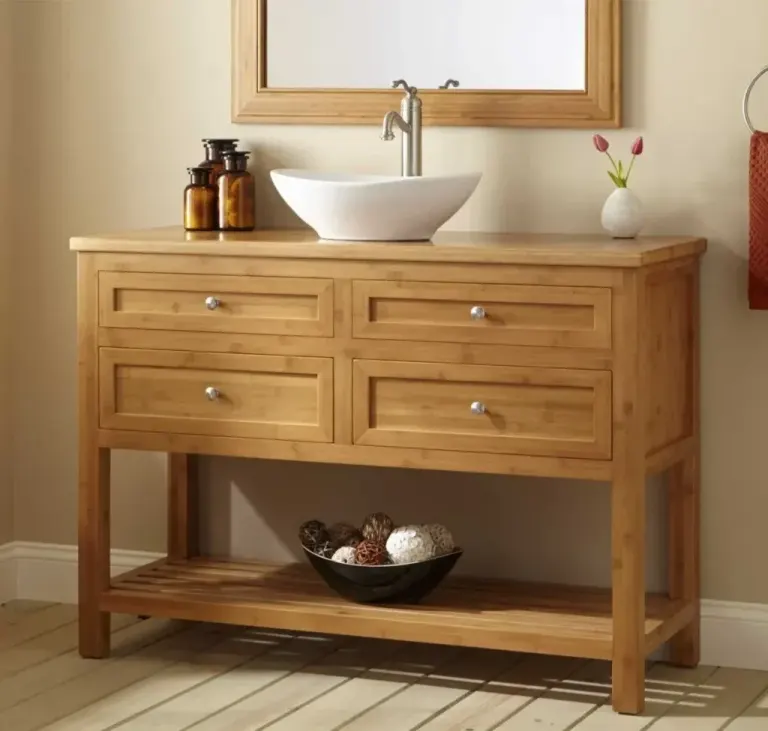
While Turkey’s woodworking sector boasts thousands of furniture producers, only a specialized subset operates true wet-zone engineering facilities equipped with computer-controlled vacuum drying kilns, 5-axis CNC joinery lines, pressurized two-component (2K) polyurethane spray booths, and international EUDR/Lacey Act compliance teams. Sourcing from an under-equipped workshop risks seasonal door warping, unsealed edge swelling, and customs rejections at European or North American ports.
This comprehensive B2B procurement manual serves as the definitive Turkish solid wood bathroom cabinet manufacturing clusters and OEM supplier vetting guide, mapping Turkey’s four primary millwork hubs—İnegöl (Bursa), Istanbul (Modoko & Masko), Ankara (Siteler), and Izmir / Aegean Coast—alongside a rigorous 25-point factory audit scorecard and OEM contract protection framework.
1. Geographic Mapping of Turkey’s Four Core Millwork Clusters
Each regional woodworking cluster in Turkey evolved around distinct forestry access, machinery investments, and export specializations. Aligning your project volume and design complexity with the right geographic cluster maximizes cost efficiency and build quality.
Manufacturing Cluster Primary Production Profile Typical Order Volume (MOQ) Core Timber & Stone Strengths Nearest Export Exit Hubs
İnegöl (Bursa) Automated serial production, OEM/ODM export lines, hospitality runs 20 – 500+ units per SKU Kiln-dried Black Sea oak, beech, ThermoWood ash; Marmara & Bilecik marble Port of Gemlik (45 min) & overland EU road freight
Istanbul (Modoko / Masko / İkitelli) High-end bespoke architectural millwork, luxury hotel mockups, curved joinery 5 – 150 units (custom shop drawings) Turkish walnut, imported Burmese teak, book-matched veneers, LED smart mirrors Port of Ambarlı, Sabiha Gökçen/IST air cargo, Kapıkule road
Ankara (Siteler) Master artisan solid hardwood joinery, carved & distressed heritage vanities 1 – 100 units (tailor-made) Anatolian chestnut, solid oak, hand-scraped & aged patinas; Afyon marble Port of Mersin / Gemlik & central Anatolian rail/road
Izmir & Aegean Coast (Torbalı / Çiğli) Marine & coastal wet-room vanities, yacht-grade teak & iroko cabinetry 10 – 250 units FSC plantation teak, West African iroko, ThermoWood; Denizli travertine Port of Alsancak (Izmir) & Aegean Ro-Ro terminals
1. İnegöl (Bursa): High-Volume OEM/ODM Powerhouse
Located 45 kilometers east of Bursa and immediately adjacent to the Port of Gemlik, İnegöl is Turkey’s largest vertically integrated furniture manufacturing zone. Tier-1 plants here operate industrial vacuum drying kilns, automated Homag/Biesse CNC nesting lines, and robotic reciprocating spray lines—making İnegöl the premier hub for wholesale distributors and multi-unit hotel chains seeking consistent batch repeatability and competitive FOB container pricing.
2. Istanbul (Modoko, Masko, and Tuzla/İkitelli Industrial Zones): Design-Led Architectural Joinery
Istanbul’s premier millwork studios cater directly to international interior architects and boutique hospitality developers. Situated close to global air hubs and European highway corridors, Istanbul fabricators excel at complex mixed-material assemblies—integrating CNC-fluted Turkish walnut, curved bent-laminated aprons, IP65-rated tunable LED mirror cabinets, and honed Muğla marble countertops under tight project deadlines.
3. Ankara (Siteler): Artisanal Solid Timber Craftsmanship
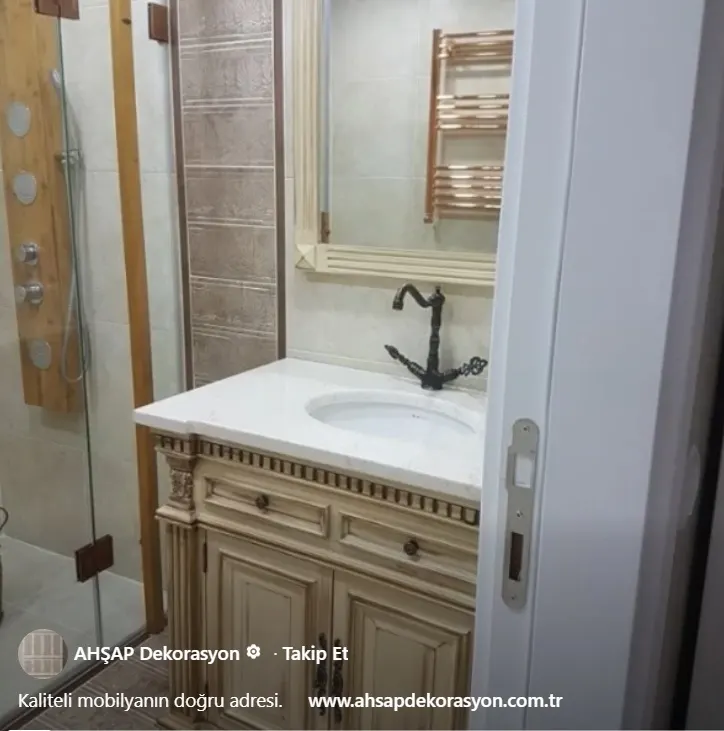
Ankara’s historic Siteler district houses multi-generational master cabinetmakers specializing in heavy solid-timber joinery, mortise-and-tenon frame-and-panel doors, hand-distressed Anatolian chestnut vanities, and custom relief carving. Siteler workshops offer exceptional flexibility for bespoke architectural projects requiring non-standard dimensions and hand-applied reactive stains.
4. Izmir and the Aegean Corridor: Marine & Resort Wet-Zone Specialists
Serving luxury coastal villas in Bodrum, Çeşme, and Mediterranean resorts, Izmir manufacturers specialize in extreme-humidity wet-zone cabinetry crafted from Burmese teak, African iroko, and thermally modified ash paired with resin-filled Denizli vein-cut travertine.
2. On-Site & Virtual Factory Audit Scorecard: 12 Non-Negotiable Technical Checks
Before awarding an OEM/ODM manufacturing contract in the import and export of solid wood bathroom cabinets in Turkey, verify these twelve operational capabilities inside the supplier’s plant:
1. In-House Kiln-Drying & Digital Moisture Logging: Confirm the factory operates computer-controlled drying kilns (or buys exclusively from certified kiln-dried timber mills) and maintains calibrated pin moisture meters on the shop floor verifying 6%–8% equilibrium moisture content (EMC) prior to machining.
2. Pressurized, Dust-Free Spray Finishing Booths: Open-air workshop spraying traps airborne sawdust in wet varnish and yields uneven film thickness. Tier-1 exporters operate positive-pressure filtered spray booths applying Italian or German two-component (2K) catalyzed aliphatic polyurethane (Renner, Milesi, or Sayerlack).
3. Six-Sided Panel Encapsulation Protocol: Inspect finished inventory on the packing line. Flip a vanity upside down and check the rear back panel and drawer undersides—all six faces must exhibit smooth, sealed catalyzed clear-coat protection rather than raw, porous wood.
4. BS 1088 Marine Plywood & Type-I Waterproof Glues: Verify that hybrid carcass boxes use genuine phenolic-bonded marine birch plywood (not standard interior chipboard) and that solid wood joints are bonded with D4 / ANSI Type-I waterproof polyurethane or PVA adhesives.
5. Authentic European Wet-Zone Hardware Inventory: Inspect the hardware warehouse to confirm genuine Blum, Hettich, Salice, or Camar boxes—specifically 304/316 stainless steel or marine-nickel soft-close hinges and heavy-duty floating wall brackets rated at 150+ kg per pair.
6. CNC Precision & Dry-Fit Assembly Area: Confirm the plant dedicates floor space to pre-shipment dry-fitting where stone countertops, undermount basins, and wooden carcasses are test-assembled together before crating.
7. In-House Stone Fabrication or Audited Quarry Partner: If bundling Turkish marble or travertine countertops, confirm whether stone CNC cutting occurs in-house or through an audited partner in Afyon/Bursa with shared CAD tolerance protocols (±1.0 mm).
8. CE / IEC 60364-7-701 Electrical Testing Bench: For illuminated LED mirror cabinets and demister mirrors, verify that the factory performs hi-pot dielectric insulation and earth-continuity testing on every wired unit and uses IP44/IP65-rated 24V SELV isolated drivers.
9. FSC® Chain-of-Custody & EUDR / Lacey Act Traceability Files: Audit sample export dossiers to confirm the supplier can trace every board back to legal harvest coordinates and scientific botanical names (Castanea sativa, Juglans regia, Quercus alba, Tectona grandis).
10. ISPM-15 Certified Crating & Vapor-Barrier Packaging Line: Verify licensed IPPC HT heat-treatment stamps on exterior crates and confirm the use of 150-micron aluminized vapor-barrier foil bags with silica-gel desiccants inside crates.
11. English-Speaking CAD/CAM Engineering Team: Confirm dedicated technical drafters capable of interpreting international architectural elevations, MEP rough-in plans, and ADA accessibility tolerances without translation errors.
12. Export Track Record & Reference Projects: Request verifiable bill-of-lading histories or hospitality project references in the EU, UK, US, or GCC markets.
3. OEM / ODM Contract Clauses to Protect International Buyers
When structuring a supply agreement under this Turkish solid wood bathroom cabinet manufacturing clusters and OEM supplier vetting guide, embed five protective commercial clauses into your purchase contract:
• Signed Physical Strike-Off & Golden Sample Retention: Require two identical signed finish strike-offs (showing exact timber species, grain cut, stain tone, and matte sheen level)—one retained by the buyer and one sealed at the factory as the binding quality benchmark for mass production.
• Moisture-Content Acceptance Tolerance (6%–8% EMC): Specify that any batch exhibiting wood moisture readings above 9.5% during Pre-Shipment Inspection (PSI) will be rejected or re-conditioned at the manufacturer’s expense prior to container loading.
• Mandatory Third-Party Pre-Shipment Inspection (PSI) Hold Point: Tie the final balance payment (typically 60%–70% T/T or irrevocable L/C) to a passing PSI report issued by an accredited agency (SGS, Bureau Veritas, Intertek) or the buyer’s designated quality engineer before vessel departure from Gemlik, Ambarlı, or Izmir.
• Non-Disclosure & Custom Mold/Design Exclusivity (NDA / NNN): For ODM collections developed from the buyer’s proprietary architectural drawings, execute a Turkish-law-enforceable Non-Disclosure, Non-Use, and Non-Circumvention (NNN) agreement preventing the factory from displaying or reselling your custom vanity designs to competing distributors.
• Transit Breakage & Spare-Parts Contingency Kit: Require every container shipment to include a 2% free-of-charge spare hardware and touch-up kit—containing extra Blum/Hettich soft-close hinges, undermount runner clips, matching 2K catalyzed touch-up lacquer pens, and spare LED drivers—so on-site installation teams can resolve minor field adjustments immediately without waiting for international air couriers.
We have completed this comprehensive technical series covering bathroom cabinet models, distressed solid wood vanities, solid wood wet-zone joinery, and the import and export of solid wood bathroom cabinets in Turkey.