Matching Console Tables to Hotel Design Styles: Classic, Contemporary, Japandi and Art Deco
Each interior style has its own logic for proportion, leg shape, edge detail and finish. This guide maps those choices so you can brief a console table that fits the design concept and can be produced reliably.
Console table design styles are easiest to specify when you translate a mood board into concrete decisions: top shape, leg type, edge profile, finish and hardware. A console that looks right in a classic lobby will feel wrong in a Japandi suite, even if both are made of oak. Below we map four styles that designers brief most often to the details that define them, so you can write a clearer specification for a made-to-order project.
Palmiye produces custom wooden furniture to project drawings in our Istanbul factory and ships worldwide. The notes here come from that kind of work: turning a style direction into drawings a factory can build.
Why style needs to be translated into details
A style name such as "contemporary" or "Art Deco" means different things to different people. A factory cannot price or build a name; it needs dimensions, profiles and finish references. The more of these you define early, the more accurate the first quotation will be.
Five details do most of the work in setting a console's character:
- Plan shape: rectangular, curved, demilune or oval.
- Leg or base type: tapered, turned, sled, panel or plinth.
- Top edge profile: square, bevelled, rounded or stepped.
- Surface treatment: natural oil, matte lacquer, gloss, veneer pattern or fluting.
- Accents: metal trims, stone tops, inlay or carved elements.
Classic hotel interiors
Classic schemes rely on symmetry, visible craftsmanship and a sense of weight. Consoles tend to sit against a central wall, often paired with a mirror and a pair of lamps, so the piece has to hold its own as a focal point.
Shapes and legs
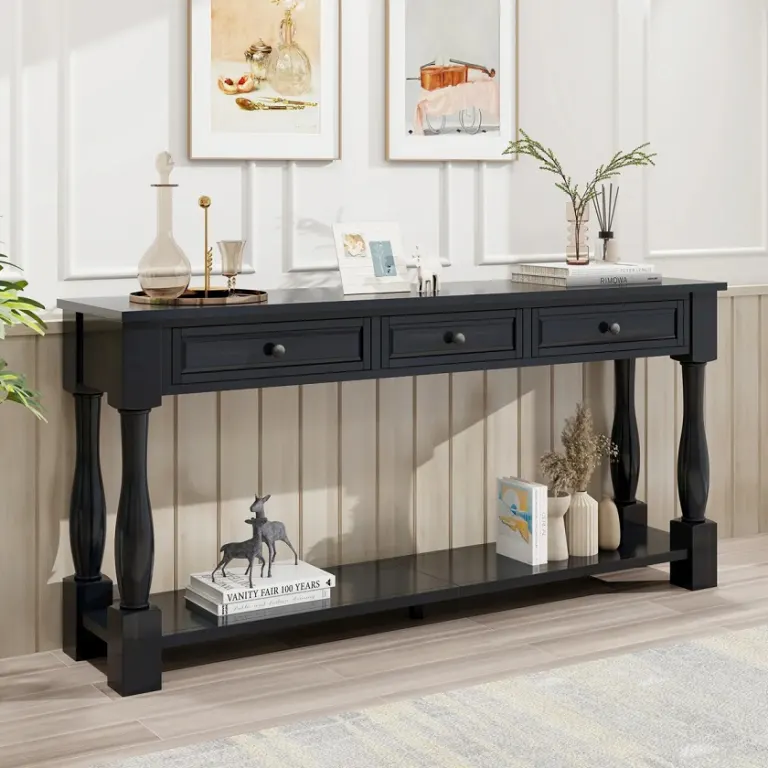
Rectangular and demilune plans are the most common. Turned legs, cabriole-inspired curves and carved aprons suit this style, and so do solid-looking frames with a defined apron under the top. Turned and carved parts require more machining time, so they usually affect both price and lead time compared with plain legs.
Details and finishes
- Moulded or bevelled top edges with a visible profile.
- Walnut or darker stained oak, finished in satin or semi-gloss lacquer.
- Optional marble or stone top, pairing well with brass or antique-effect metal accents.
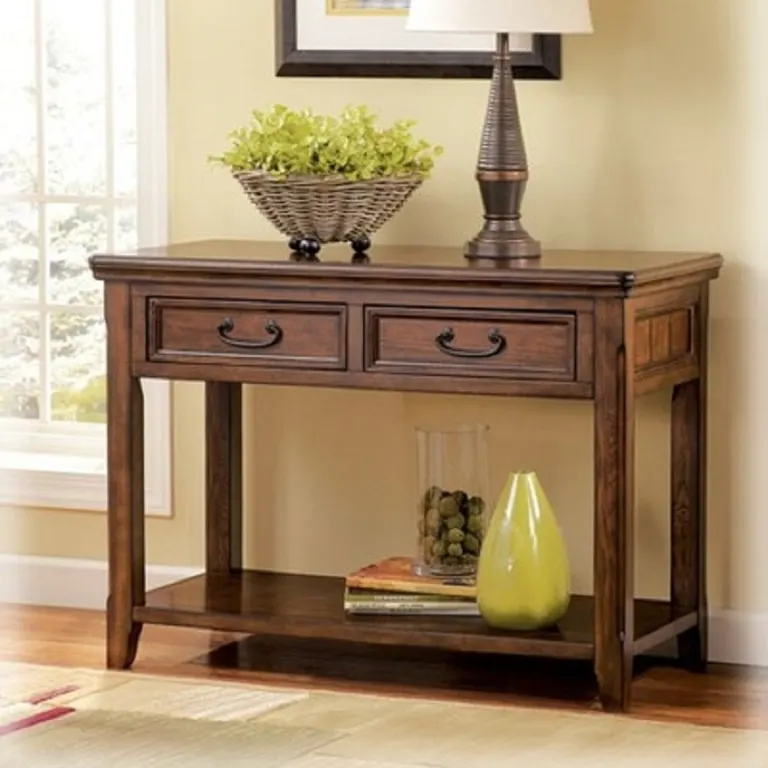
- Drawers with traditional pulls, or concealed storage behind panelled doors.
For heritage buildings, consider asking for a reference photograph and measured details, so the factory can reproduce the profile accurately in drawings before sampling.
Contemporary interiors
A contemporary wooden console is defined by restraint: clean lines, thin profiles and honest materials. The style is flexible, which is why it is popular for hotel chains that need one family of pieces across many properties.
Shapes and legs
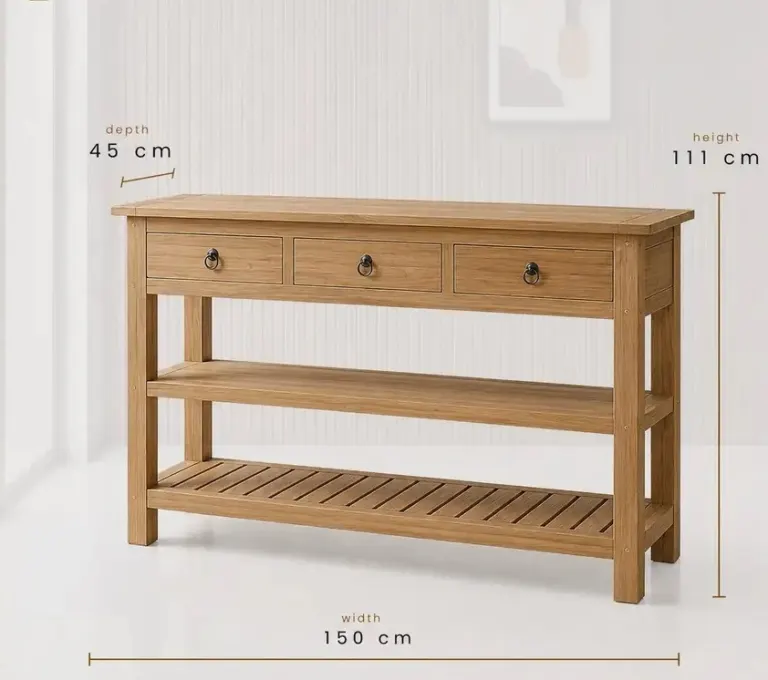
Slim rectangular tops with tapered or square-section legs are typical. Floating wall-mounted designs also fit well, since they keep the floor visible and make small corridors feel larger. Sled and panel bases give a more architectural look, with fewer joints on view.
Details and finishes
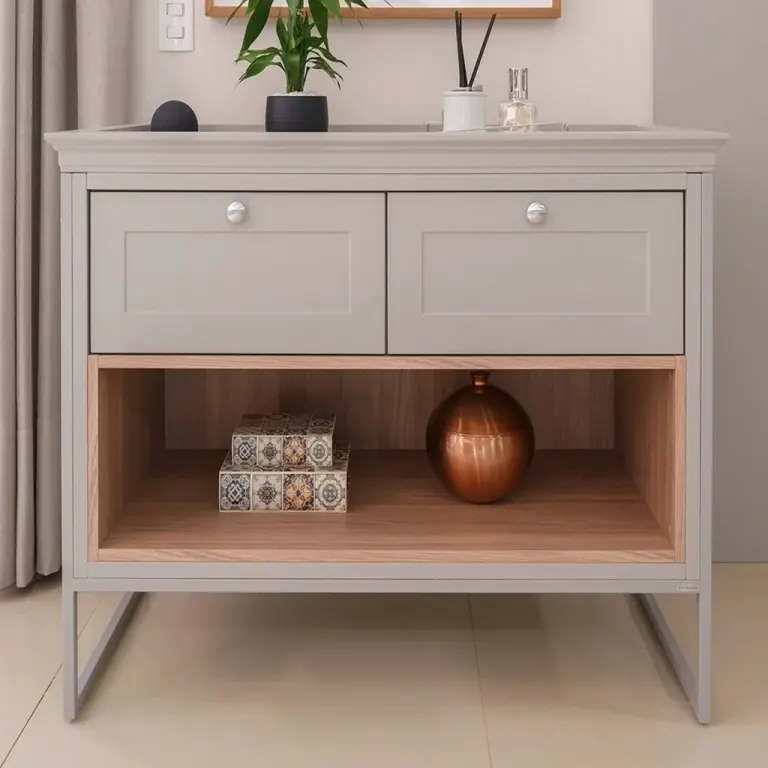
- Square or slightly eased top edges, with minimal visible hardware.
- Oak or ash veneer, or lacquer in neutral and muted colours.
- Push-to-open drawers or finger grooves rather than applied handles.
- Mixed materials such as timber with black steel, used sparingly.
Because the forms are simple, finish quality becomes the main point of difference. Edge banding, veneer matching and colour consistency across a batch are easy to see on a plain design, so approve a sample before production.
Japandi interiors
Japandi furniture blends Japanese minimalism with Scandinavian warmth. The result is calm, low-contrast and tactile. In hotel use it works well in guest rooms, spa-adjacent areas and boutique lobbies where a quiet atmosphere is part of the brand.
Shapes and legs
Choose low, light-looking pieces with generous negative space beneath the top. Slim tapered legs, simple trestle-style frames and softly rounded corners are typical. Avoid heavy ornament; the beauty of the piece comes from proportion and joinery.
Details and finishes
- Light to mid-tone oak or ash, with matte natural oil or low-sheen finishes that keep the grain visible.
- Slatted or fluted fronts used in small, controlled areas.
- Rounded or softly eased edges for a gentle touch.
- Optional cane or rattan inserts for texture, if the scheme allows.
Oil finishes look natural, but they need a maintenance plan for high-traffic hotel areas. Discuss protective coatings with your factory so the look stays soft without sacrificing durability.
Art Deco interiors
An Art Deco console is about geometry, contrast and richness. The style suits upscale lobbies, bars and suites where the design team wants a sense of occasion. Detail is central here, so drawings need to be precise.
Shapes and legs
Look for strong symmetry, stepped forms, curved ends and fan or sunburst motifs. Panel bases, columnar legs and fluted elements are common. Demilune and half-round shapes also work well, especially in entrance areas.
Details and finishes
- Dark walnut or rich veneers, often with book-matched or sequenced grain patterns.
- High-gloss or deep satin lacquer, with attention to reflections.
- Brass or gold-tone trims and inlay or marquetry accents.
- Marble or stone tops with contrasting veining.
Curves, inlay and gloss finishes all raise the technical demands on production. Ask the factory what is realistic for your quantity and timeline before the design is fixed.
Quick comparison table
| Style | Typical plan | Typical legs or base | Edge and finish |
|---|---|---|---|
| Classic | Rectangular, demilune | Turned, carved, apron frame | Moulded edge, satin or semi-gloss |
| Contemporary | Slim rectangular, floating | Tapered, square, sled | Eased edge, matte or veneer |
| Japandi | Low rectangular, soft corners | Slim tapered, trestle | Rounded edge, natural oil |
| Art Deco | Symmetrical, curved, stepped | Panel, columnar, fluted | Gloss lacquer, inlay, brass accents |
How to brief a console in your chosen style
A short, structured brief saves several rounds of clarification. Include the following when you contact a manufacturer:
- Style name plus two or three reference images showing the details you like.
- Overall dimensions and the location of the piece (lobby, corridor, guest room).
- Preferred wood species or veneer, and finish type with a colour reference.
- Any stone, metal or glass elements.
- Quantity per room type and the target delivery period.
With this information, the factory can prepare shop drawings and recommend adjustments, for example simplifying a leg profile where budget is tight while keeping the overall look.
Practical points before you finalise the style
- Hotel use: consoles are knocked by luggage and trolleys, so check edge protection and stability regardless of style.
- Climate and region: finish choices may need to change for very humid or very dry destinations.
- Consistency: for multi-room orders, agree an approved sample as the standard for colour and detail.
- Mix of styles: some hotels combine styles, such as a Japandi guest room with a more Art Deco lobby. Keep a shared material or finish to tie them together.
Next step
If you have a style direction but not yet a final design, send us your reference images, drawings or room schedule. We will review the brief and come back with material suggestions, production options and shipping choices for your project.
Sıkça Sorulan Sorular
Which console table style is the easiest to produce in large quantities?
Contemporary designs with straight legs, simple edges and veneer or matte lacquer finishes are usually the most straightforward to repeat across a large batch. Styles with carving, inlay or high-gloss finishes need more handwork and inspection, so timelines and costs depend on the specific design.
What defines a Japandi console table?
A Japandi console is typically low, light-looking and simple, with slim tapered legs, softly rounded edges and natural wood tones in oak or ash. Matte or oiled finishes keep the grain visible. Ornament is minimal, and the focus is on proportion and quality joinery.
Can an Art Deco console be made in a plain wood finish?
Yes. Art Deco character comes mainly from geometry, symmetry and detail such as stepped forms, fluting or curved ends. A veneer or lacquer finish can work well, and metal trims or inlay can be added later or omitted to control budget.
Can you reproduce a console from a reference photo in a specific style?
Yes, we can work from reference photos, sketches or CAD files. We prepare shop drawings with dimensions, leg profiles and finish details for your approval before sampling. Exact estimates depend on the complexity of the design and the materials selected.
Do you ship custom console tables worldwide?
Yes, we produce to order in Istanbul and export to hotel projects in many regions. Shipping terms such as FOB or DAP, packing method and delivery schedule are agreed per project, based on quantity, materials and destination.
Every hotel project is different. Send us your drawings or room schedule for a tailored proposal on materials, lead time and shipping.