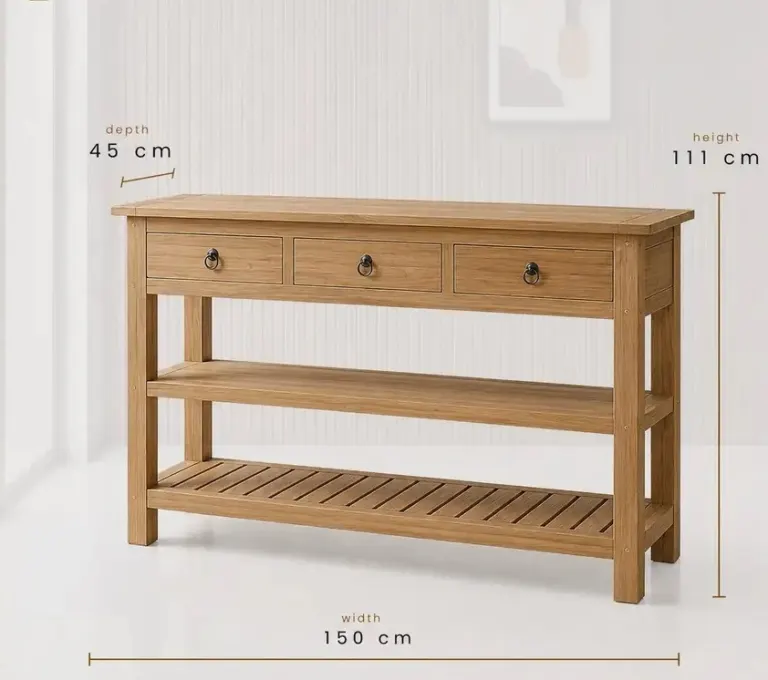
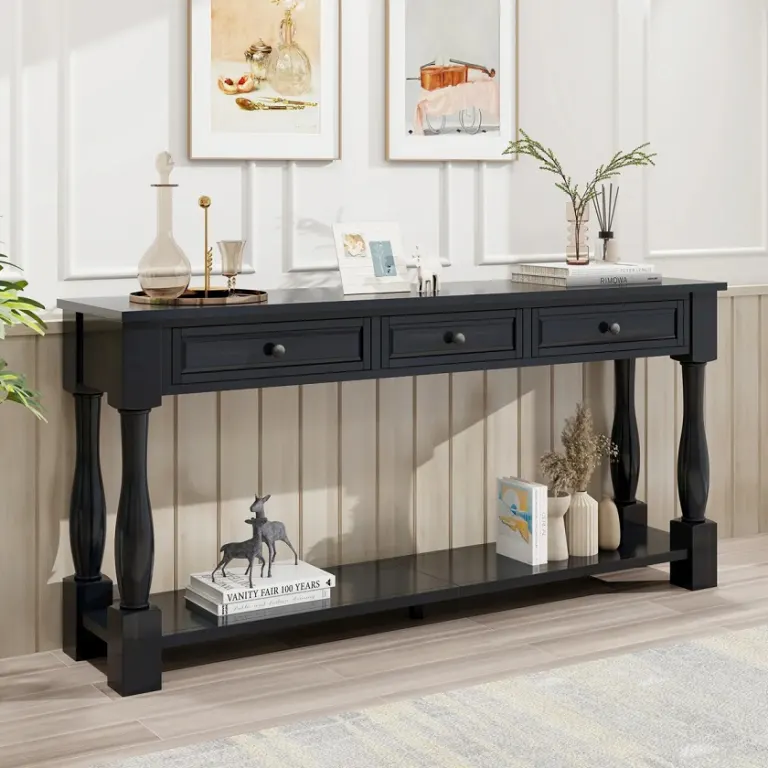
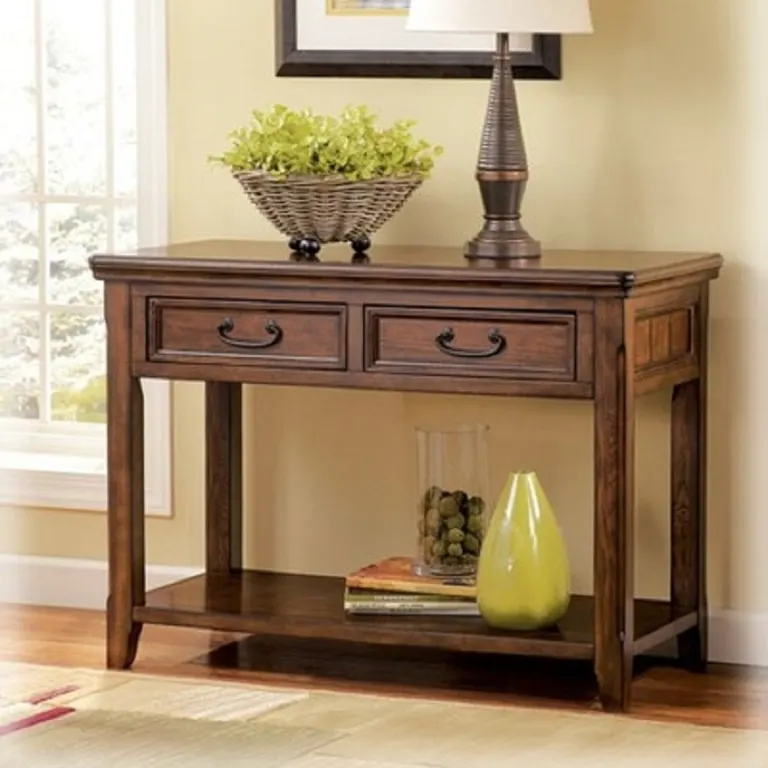
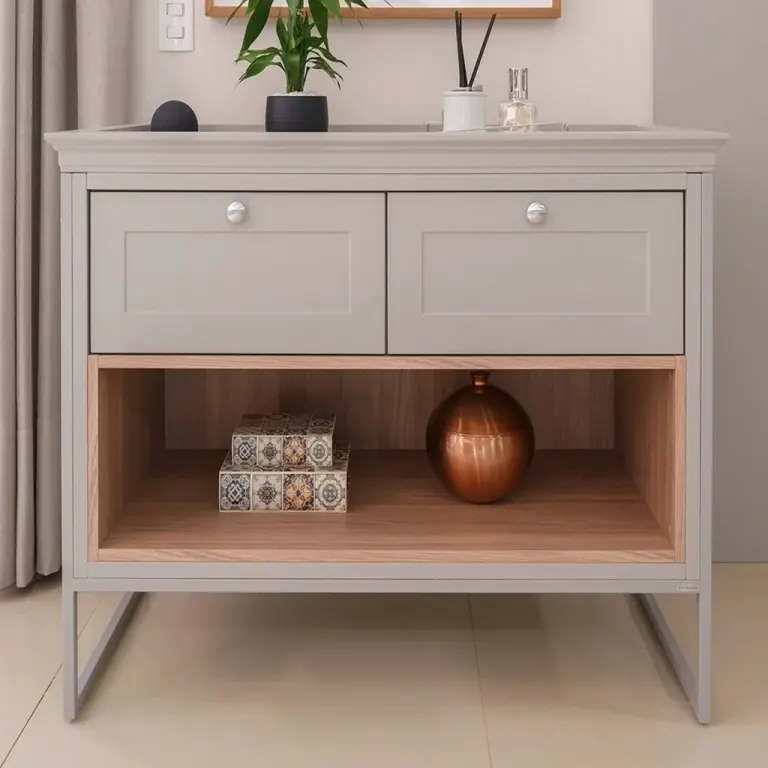
Knock-Down vs Fully Assembled Console Tables for Export: Shipping Volume and Site Labour
A knock-down console table saves container space but moves assembly work to your site. This guide weighs freight savings against installation time, joint quality and risk, so you can choose the right option for your project.
A knock-down console table ships in parts and is assembled on site, while a fully assembled table arrives ready to place. The knock-down route usually reduces shipping volume, but it adds site labour and puts more weight on the quality of the joints. For hotel projects with many identical pieces, the right choice depends on freight cost, installer skill and how much finish damage you can tolerate.
Below we compare both approaches from a buyer's point of view. We are a custom manufacturer in Istanbul producing to project drawings and shipping worldwide, so the notes reflect what we see when planning export orders. Every project differs, so treat this as a framework rather than a fixed rule.
What Each Option Means in Practice
Knock-down (KD) console tables
A knock-down console table is delivered as separate components: the top, legs or side panels, rails, and a hardware pack. Parts are individually protected and packed flat or nested. Assembly happens at the hotel, using bolts, cam fittings, dowels or similar connectors.
You may also see the term flat pack hotel furniture. In hospitality it generally means the same idea, but with commercial-grade connectors and finished parts rather than the light fittings found in retail flat pack.
Fully assembled console tables
The table is built, checked and finished in the factory, then crated or boxed as one unit. Glued and doweled or mortise-and-tenon joints can be used, because the factory controls clamping, glue curing and final sanding. Your site team only unpacks, inspects and positions the piece.
Semi-assembled option
Some designs sit between the two. For example, the legs and frame are joined in the factory while the top ships separately, or a heavy stone top is packed apart from a wooden base. This often gives a useful compromise for pieces with fragile or heavy parts.
Shipping Volume: Where Knock-Down Saves Space
Freight is where the knock-down console table makes its case. A table with a long top and spread legs occupies a lot of air when crated assembled. Flat components stack tightly, which can raise the number of pieces per container.
The size of the saving depends on the design. A slim, rectangular table with straight legs may gain only a modest amount, while a table with wide, curved or sculptural bases may save a great deal. We do not quote a standard percentage, because it varies by model, packing method and container type. Ask for a packing calculation based on your actual drawings.
Factors that change the saving
- Leg and base shape: straight, detachable legs flatten well; curved or panel bases less so.
- Top size: the top is usually the largest component, so it limits how much volume you can recover.
- Quantity: for small orders the shipment may be groupage or part of a mixed load, where savings are smaller.
- Packing standard: protective crating adds volume in both cases, and fragile finishes need more protection than basic ones.
- Container fill: if a container is full either way, extra efficiency brings little benefit.
For container loading furniture planning, compare freight on a per-piece basis under both scenarios. Our related article on shipping cost per piece explains how crating and container fill affect the final figure.
Site Labour: The Cost Moved to Your Project
Every table you do not assemble in the factory has to be assembled by someone else. For ten pieces, that is a minor task. For several hundred pieces across many floors, it becomes a scheduling and supervision item.
Consider these labour points:
- Installer time: each table needs unpacking, part identification, assembly, levelling and cleaning up.
- Skill and tools: consistent torque, correct alignment and careful handling of finished surfaces matter more than speed.
- Work space: assembly needs a protected area, ideally off the finished floor, with waste removal.
- Programme risk: if the fit-out is late, rushed assembly is where defects appear.
Where labour is expensive or scarce, the freight savings of knock-down can be offset by site costs. In regions where skilled installers are available at a reasonable rate, the balance may tip the other way. Only your own project figures can settle this.
Joint Quality: The Real Technical Difference
A console table is a simple object, but the joint between legs and top carries most of its stress. Guests lean on it, place bags on it and sometimes push against it. A weak connection shows up first as wobble, and later as cracks or loose hardware.
Assembled joints
Factory-glued joints such as mortise and tenon or dowels can create a rigid, permanent connection. The factory controls glue application, clamping pressure and curing time, so results are repeatable. The trade-off is that the table cannot be disassembled for later transport or repair.
Knock-down joints
Knock-down connections rely on mechanical fittings: bolts into inserts, cross dowels, brackets or cam locks. When well designed with metal inserts and correct hole tolerances, they perform reliably. However, they can loosen with repeated use, so a periodic check as part of hotel maintenance is sensible.
Poorly specified knock-down joints are the usual cause of problems. Chipboard threads, overtightened screws and repeated assembly cycles weaken the connection. For solid wood or veneered hardwood tables, we recommend specifying threaded metal inserts or equivalent fixings instead of screwing directly into the timber.
For more detail on construction methods, see our article on joinery methods for wooden console tables.
Finish Damage and Handling Risk
Both options carry risk, but of different kinds. An assembled table is a bulky object that can be hit or crushed in transit, so it needs robust crating. Knock-down parts are smaller and easier to protect individually, but they get handled more often on site.
Finish damage in knock-down projects tends to happen during assembly: scratches from tools, marks from hardware or dents when parts rest on hard surfaces. Touch-up kits and clear instructions help. Matching a lacquered or oiled finish on site is possible for small marks, but it will not be invisible on every colour.
Comparison Table
| Factor | Knock-down | Fully assembled |
|---|---|---|
| Shipping volume | Lower; depends on design | Higher |
| Freight cost per piece | Usually lower for large volumes | Usually higher |
| Site labour | Assembly required | Unpack and position only |
| Joint strength | Good if well specified; check periodically | Very rigid, permanent |
| Finish damage risk | During assembly on site | During transit and unloading |
| Repair and relocation | Easier to disassemble | Harder |
| Quality control | Shared with site team | Controlled in the factory |
When to Choose Each Option
Knock-down suits you when
- You are ordering large quantities and container space is a major cost.
- Delivery routes are difficult, with narrow lifts, stairs or limited access.
- A skilled installation team is already on site.
- The design has detachable legs or a simple frame.
Fully assembled suits you when
- You order small quantities, where freight savings are small.
- The programme is tight and site labour is limited.
- Rigidity matters, for example in busy lobbies or entrances.
- The design uses curved, carved or integrated elements that cannot be separated cleanly.
Remember that lift and doorway sizes affect this decision too. A large assembled table may not pass through narrow service lifts, which can make knock-down or semi-assembled the only workable route.
How to Decide for Your Project
Use a short process to avoid guesswork:
- Request a packing calculation for both versions based on your drawings and quantity.
- Estimate installer time per piece using a sample, not an assumption.
- Check access routes, lift sizes and storage space on site.
- Ask which joint type is proposed for the knock-down version and how it is tested.
- Approve a sample or mock-up of the chosen construction before production.
A sample assembled by your own team is particularly useful. It shows how long assembly really takes and whether the instructions are clear. It also lets you see how the joint feels under load before the entire batch is produced.
Practical Specification Tips
- Ask for numbered or labelled parts so each table can be matched to its hardware pack.
- Request a clear assembly sheet with images, in a language your installers read.
- Include a small percentage of spare hardware in the order.
- Agree on the Incoterms early, such as FOB or DAP, since they define who bears risk during unloading and handling.
- Note that custom pieces are made to order, so changing the construction after approval can affect cost and lead time.
Conclusion
A knock-down console table gives you better container efficiency and easier site access, while an assembled table gives you stronger factory-controlled joints and less labour on site. Neither is better in every case. The right answer comes from comparing freight, installation hours and risk for your own quantity and design.
If you are planning an export order, send us your drawings or a reference photo, together with quantity and destination. We will review the design and suggest a construction and packing method that fits your project, with a quotation for your review.
Sıkça Sorulan Sorular
Is a knock-down console table weaker than an assembled one?
Not necessarily. A well-designed knock-down table with metal inserts and quality connectors can be stable in daily hotel use. Glued factory joints are usually more rigid, though. Knock-down fixings may need occasional re-tightening, so include them in your maintenance routine.
How much container space does knock-down packing save?
It depends on the model, leg shape, top size and packing method. Straight, detachable legs save the most, while curved bases save less. We do not use a standard percentage. Ask the factory for a packing calculation based on your drawings and quantity.
Who assembles knock-down console tables at the hotel?
Usually your fit-out contractor or hotel installation team. Palmiye can discuss on-site installation support depending on the project and location. Clear assembly sheets and labelled parts make the work faster and reduce errors.
Can any console table design be made knock-down?
No. Simple frames with detachable legs work well. Curved, carved, panel-base or integrated designs may lose strength or appearance if split. A semi-assembled approach, such as shipping the top separately, can be a practical alternative.
Is assembled furniture export more likely to be damaged?
Assembled tables are bulkier, so they need strong crating and careful loading. With suitable packing, the risk can be controlled. Knock-down parts are easier to protect but may be damaged during site assembly, so both options need good handling.
Should I approve a sample before choosing the construction?
Yes. A sample shows joint quality, assembly time and finish. For knock-down versions, let your own installer assemble it. This helps you compare real labour against freight savings before releasing the production order.
Every hotel project is different. Send us your drawings or room schedule for a tailored proposal on materials, lead time and shipping.